Making your own baby food
- Home
- Making your own baby food
- Older Baby / Almost Toddler
- Frequently Asked Questions
- Making your own baby food
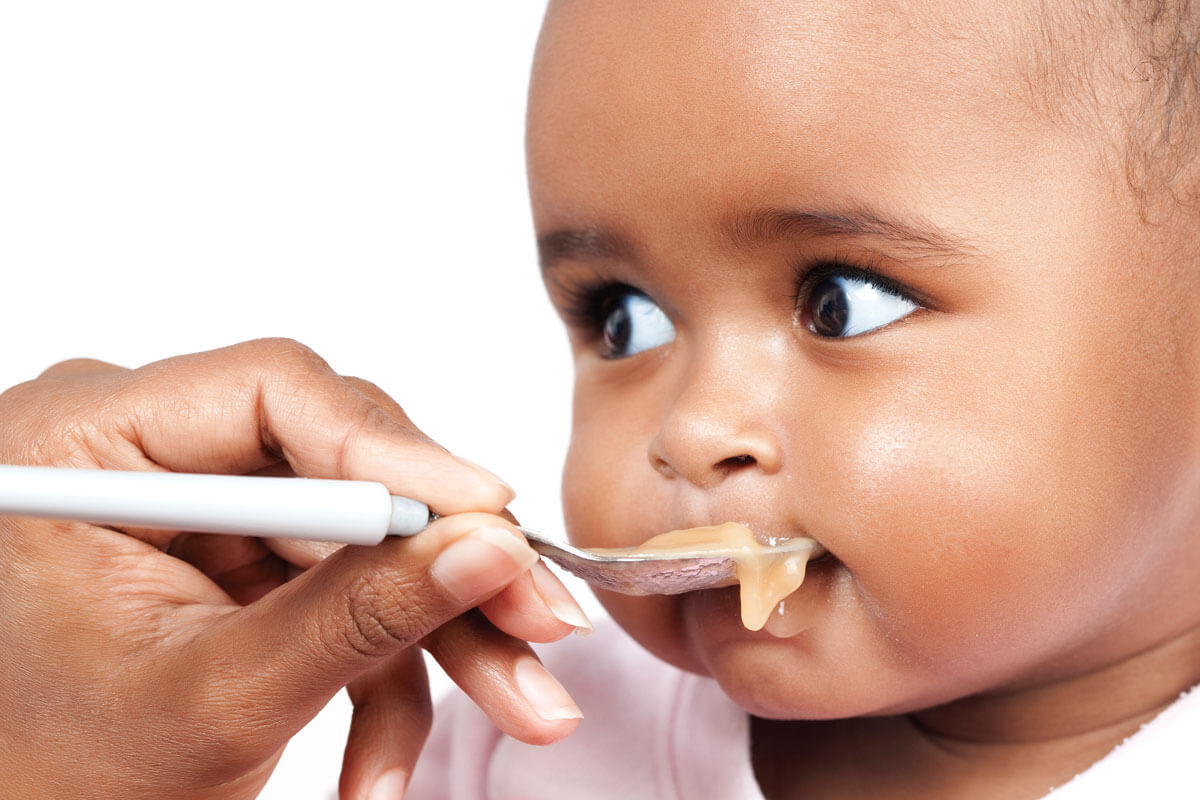
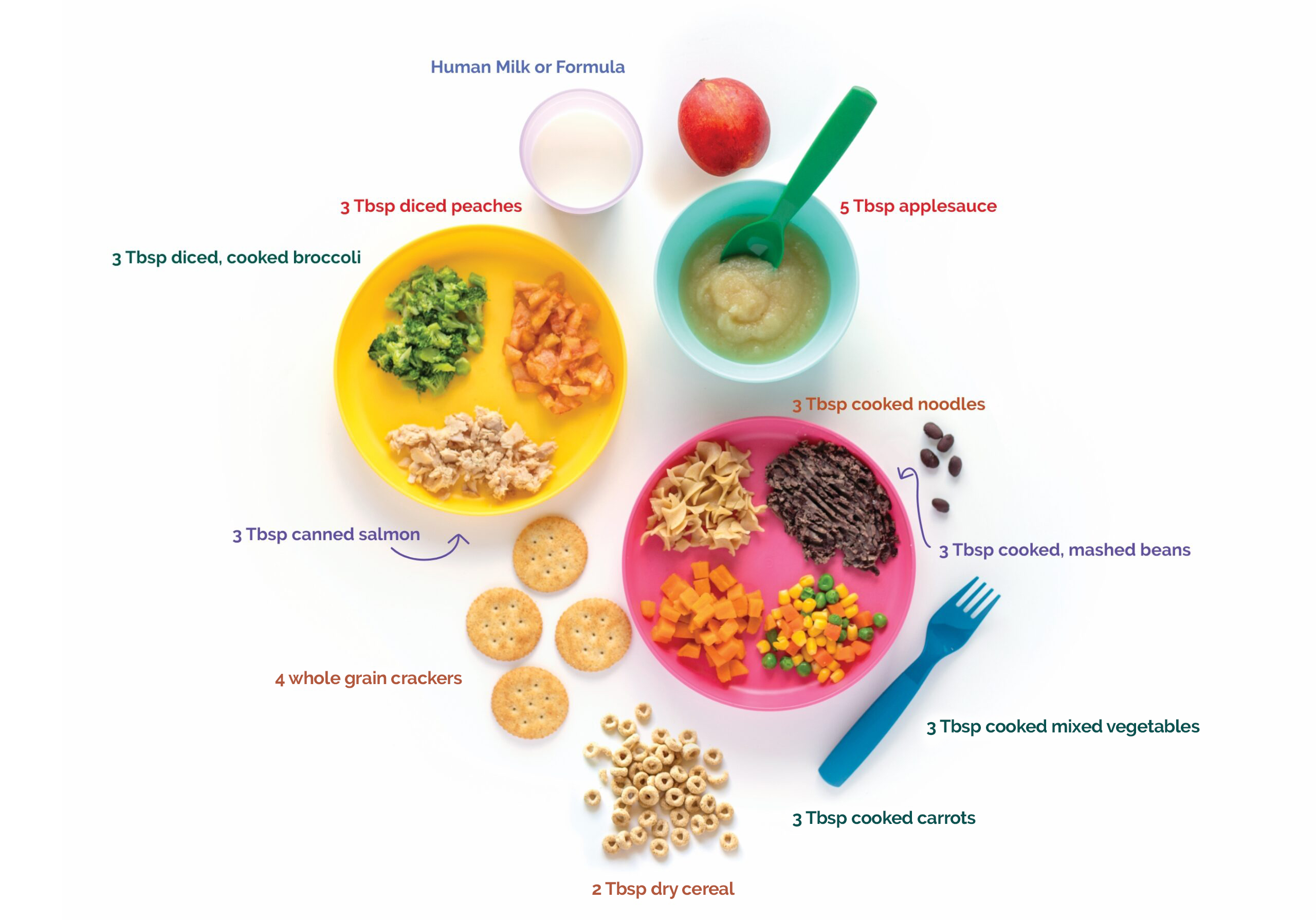
If you cook meals for yourself, it’s simple to make the food right for your baby. If you don’t cook meals for yourself, now is the time to start. Baby foods that you buy in the store are safe, handy, and good for your baby. However, they cost a lot, and they don’t have enough lumps and pieces to teach babies to chew.
Babies generally don’t eat pureed or soft and mushy food for long. They start eating Step 1 foods at age 5 or 6 months and are ready for Step 4 foods by age 8 to 10 months. Some babies only get interested in solid food when they can finger-feed themselves Step 3 or 4 foods.
Some babies aren’t ready to start solids until months later and only join in with family meals when they are 12 to 18 months old.
When your baby is ready for vegetables and fruits, carefully mash soft or cooked food with a fork. You can use a baby food grinder.
Iron-fortified baby cereal mixed with breastmilk or formula is the best first solid food.
Have cereal be the only solid food for the first few weeks. Work up to cereal twice a day. You might get bored feeding it, but he won’t get bored eating it!
You can use a blender to puree batches of vegetables or fruit and freeze the food in ice-cube trays. Be extra careful to keep everything clean.
At first, don’t mix foods. If a new food gives your baby stomachache, diarrhea, skin rash or wheezing, you need to be able to tell what causes the problem.
© Ellyn Satter
Continue to nurse on-demand, about 4-6 times in 24 hours.
Babies may experience a growth spurt around 6 months of age and may feed more often.
Offer breast milk in a cup.
24-32 oz. per day of infant formula.
Offer formula in a cup.


Breast milk is the most important source of nutrition for your baby, even after you start offering solid foods.
Continue to nurse on-demand, 3 or more times per day.
16-24 oz. per day. Offer in a cup.


Feed solids with a spoon. Never put cereal in a bottle.
Continue nursing on-demand, at least 4 times in 24 hours.
If your baby seems less interested in nursing after you introduce solids, try nursing before you offer solids.
Offer breast milk in a cup.
24-32 oz. per day.
Offer formula in a cup.
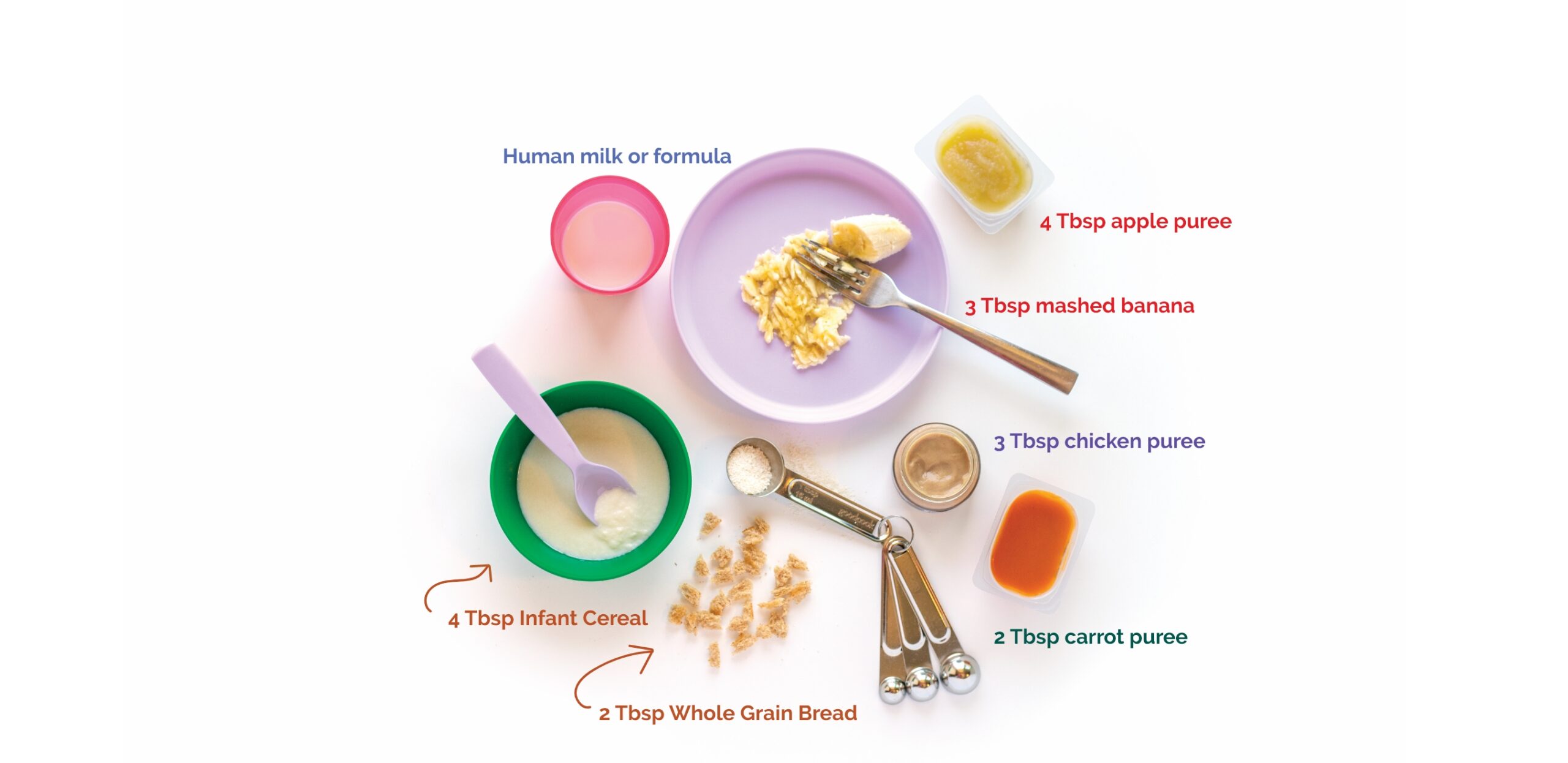
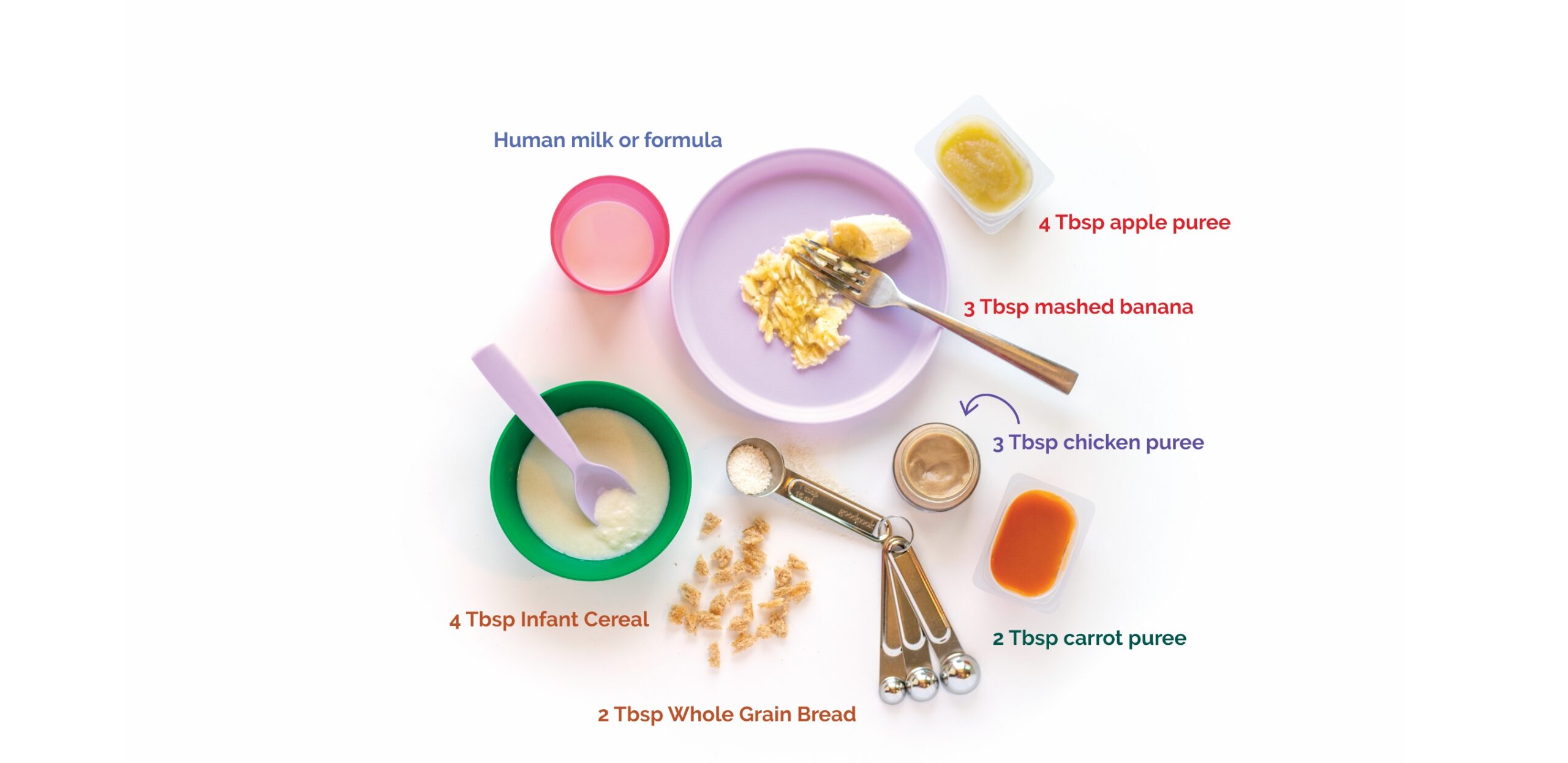
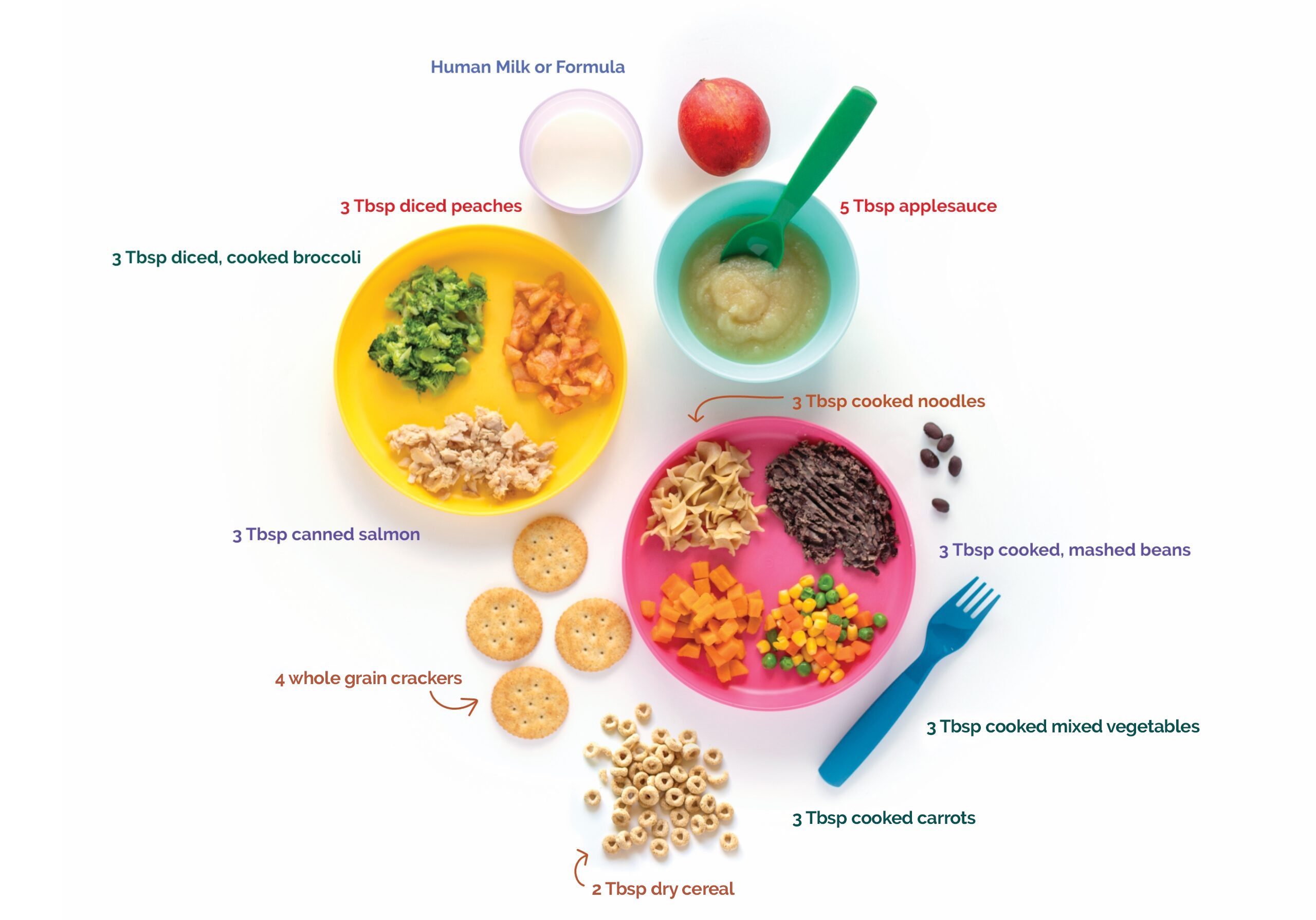
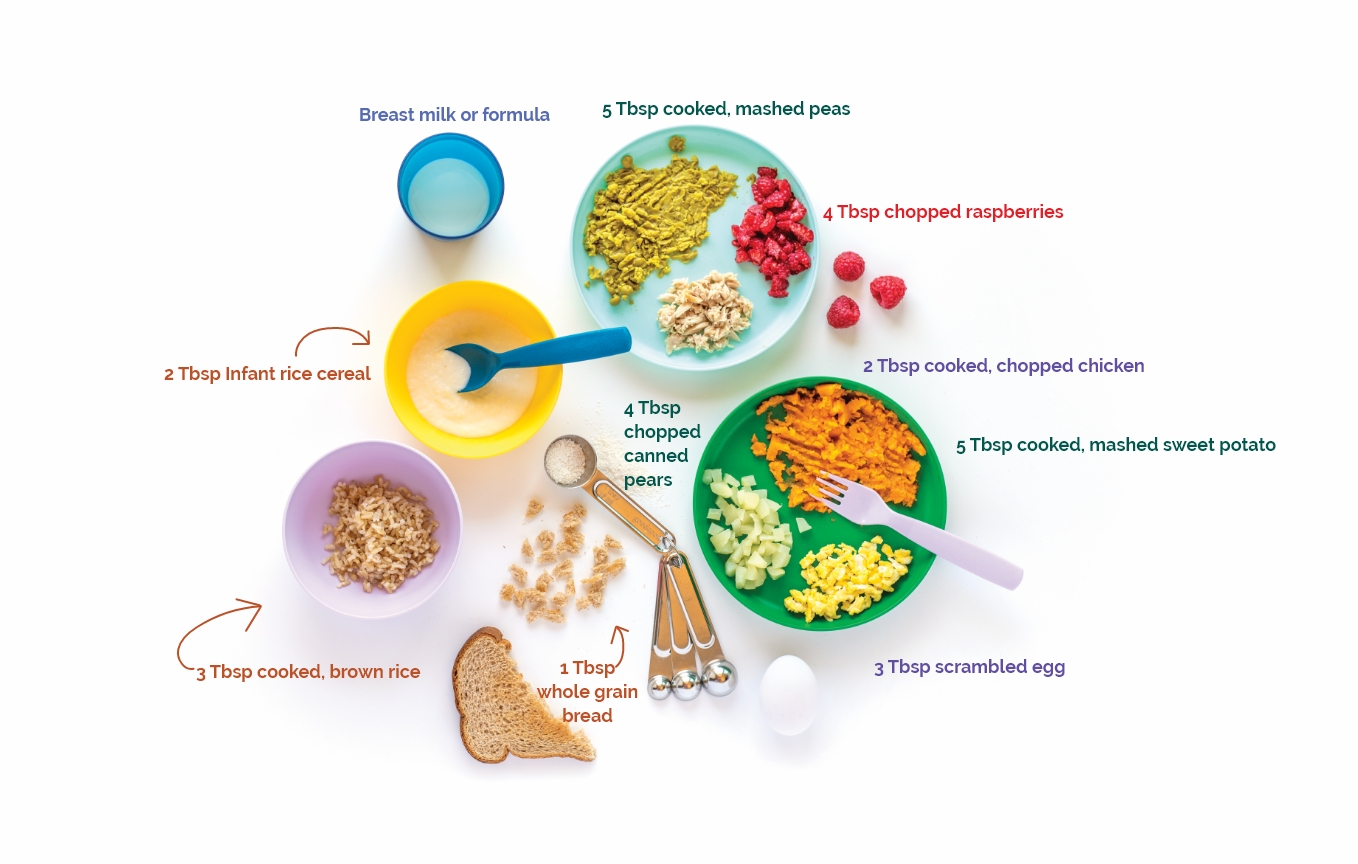
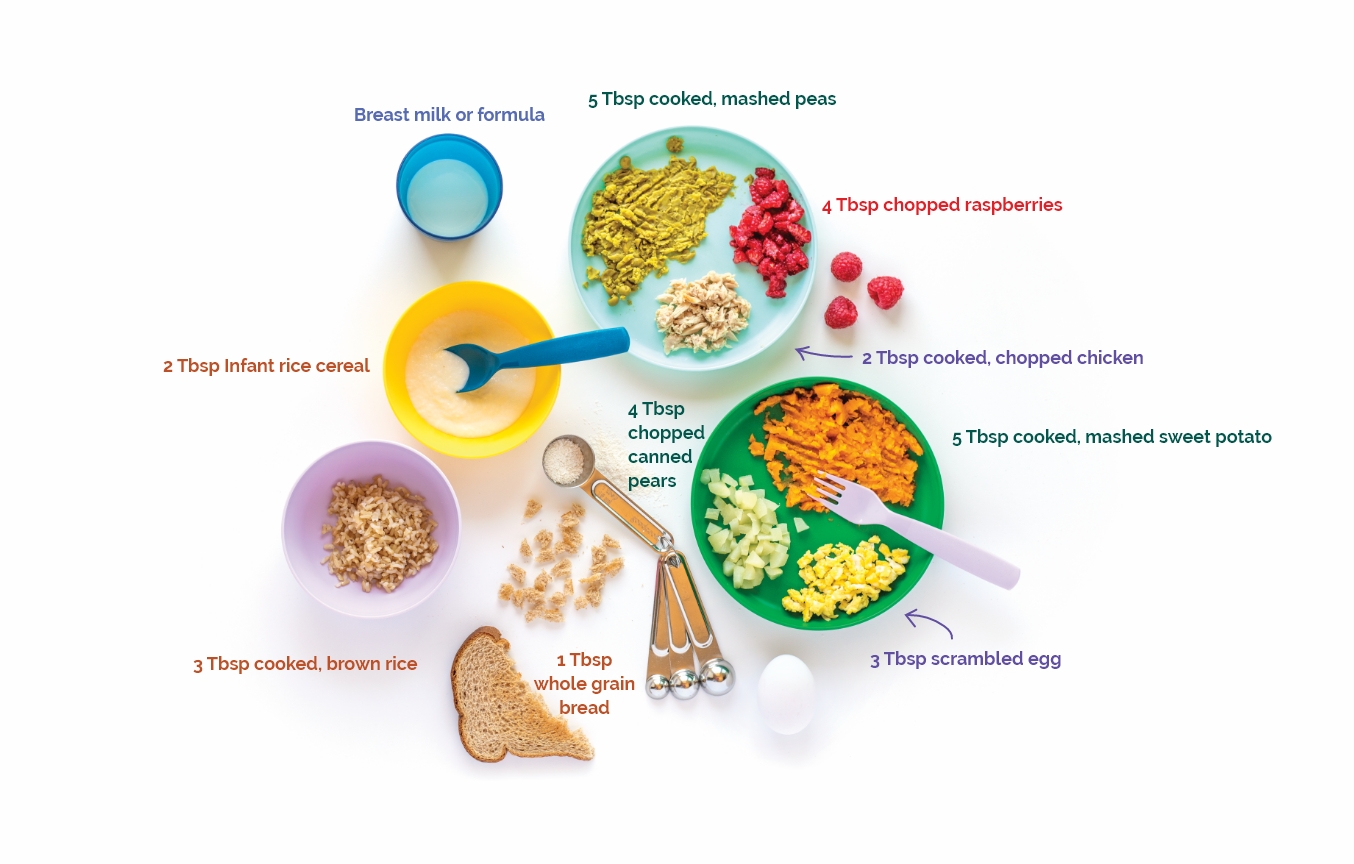
4-8 Tbsp. per day.
Plain iron-fortified infant cereals.
Plain rice or pasta.
Baby crackers, small pieces of bread, or soft tortillas.
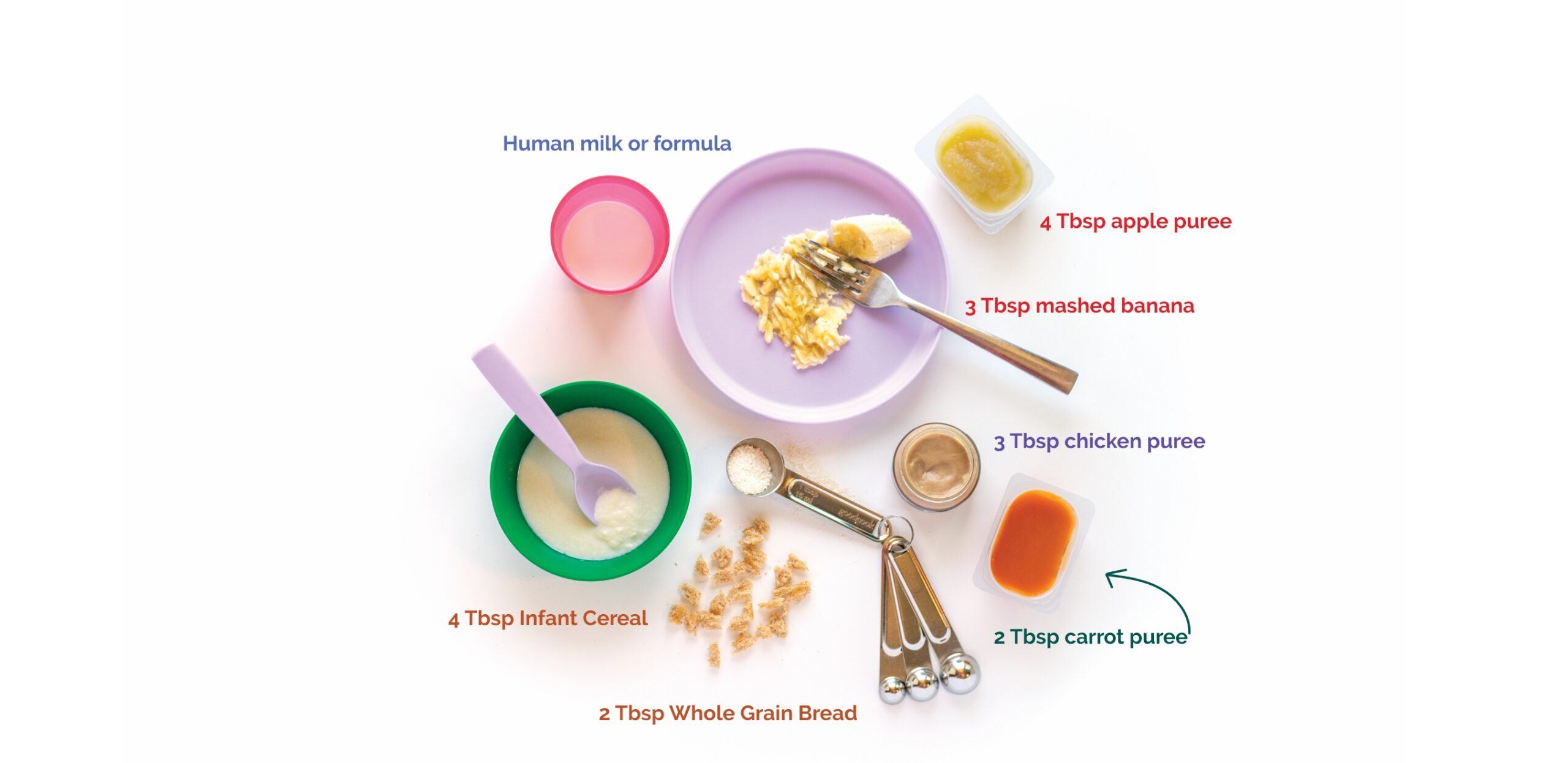
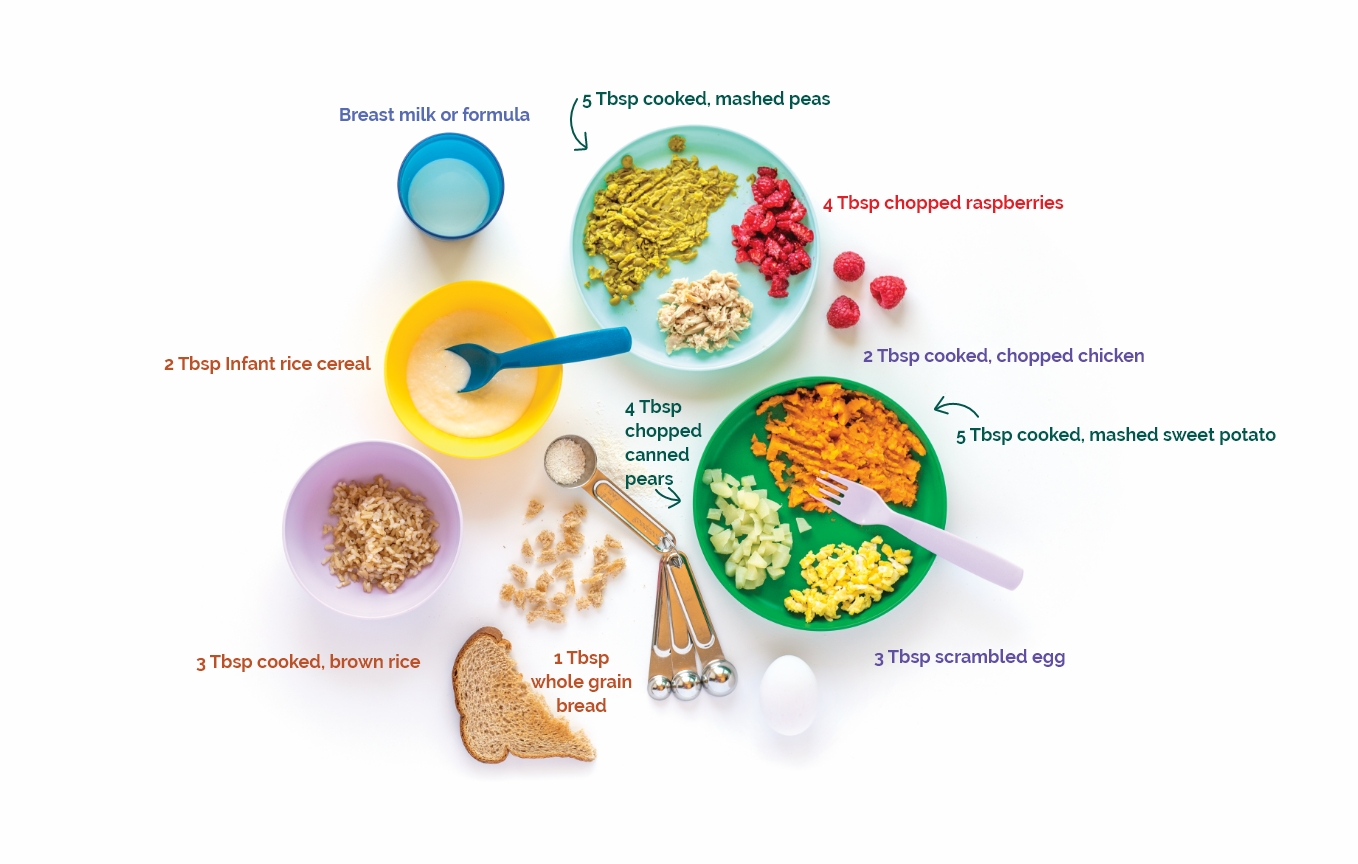
8-12 Tbsp. per day.
Plain cooked vegetables, mashed with a fork.
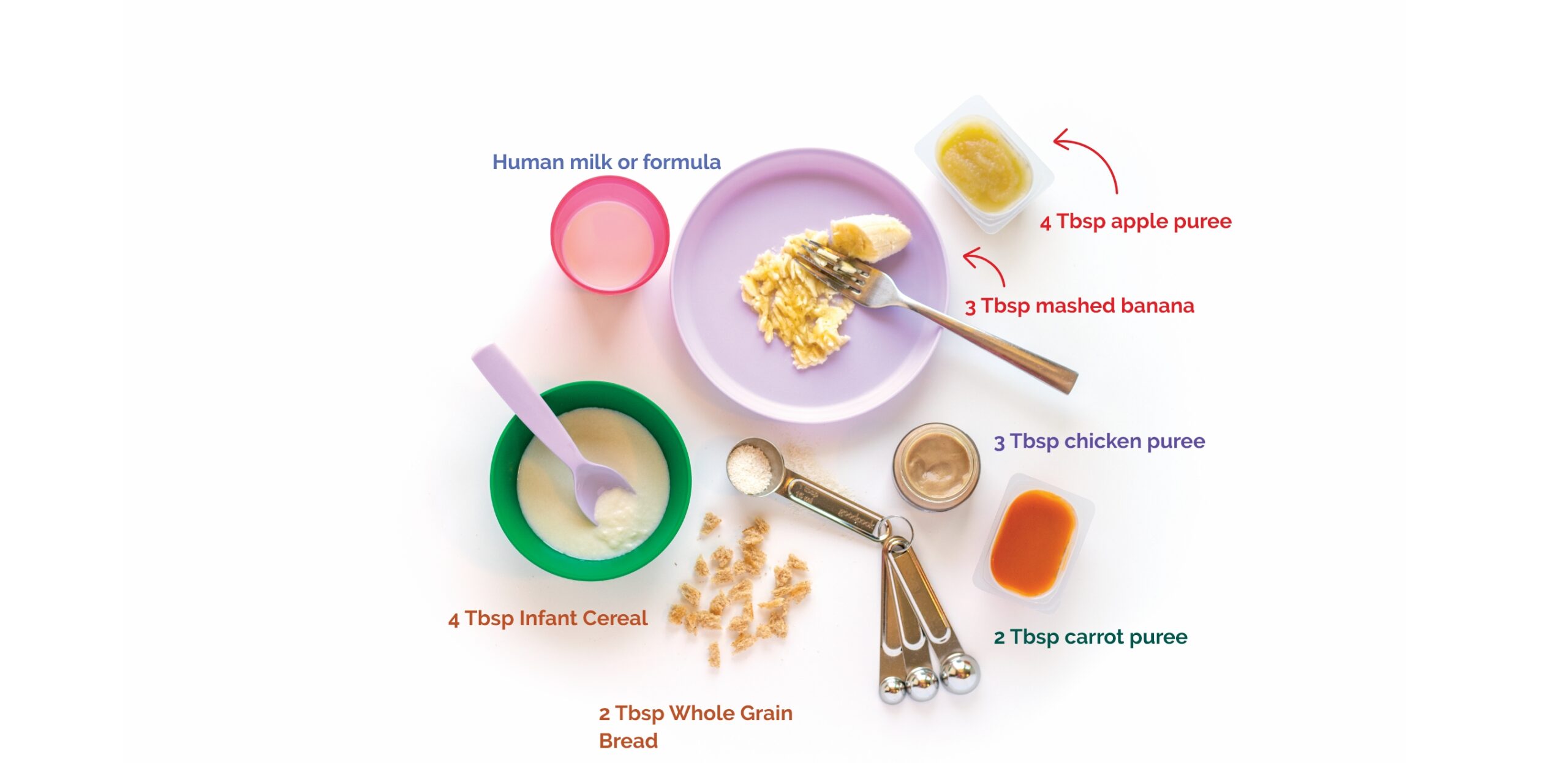
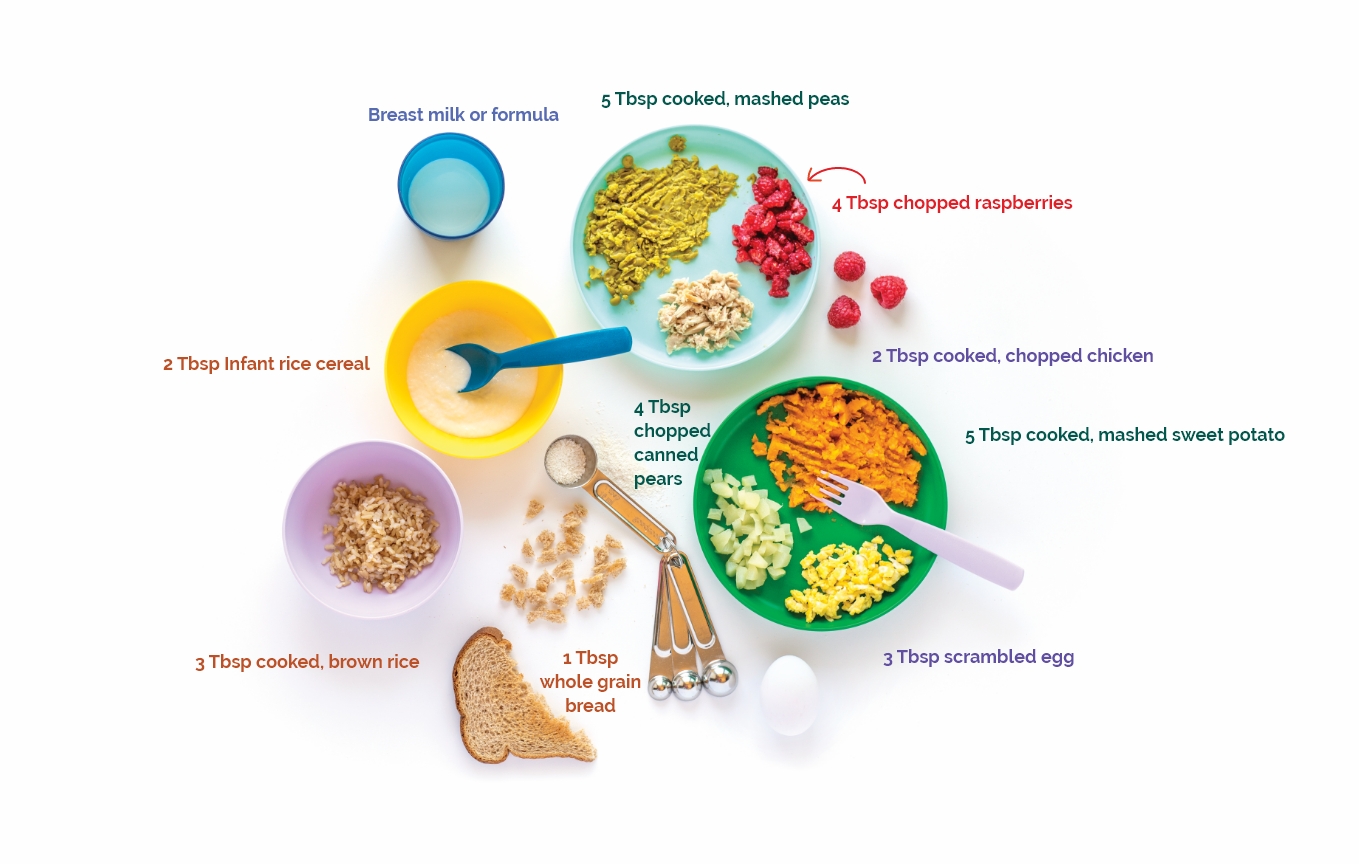
8-12 Tbsp. per day.
Peeled soft fruit in bite-size pieces.
Unsweetened canned fruit.
4-8 Tbsp. per day.
Finely ground, chopped, or diced meats, poultry, eggs, fish, or cooked mashed beans.
Cottage cheese or mild cheese.
Thinned, smooth peanut or nut butter.

Around 2-3 weeks, 6 weeks, 3 months, and 6 months of age, babies may experience a growth spurt when they feed more often.
As they grow babies can hold more milk, so feedings may become further apart and take less time.
To prevent choking, always hold your baby when feeding. Never prop up a bottle to feed.
Start offering whole milk when your baby is one year old.
The American Academy of Pediatrics recommends exclusive breastfeeding for the first six months and that breastfeeding continue for at least 12 months and beyond.
Wait to offer solid foods until your baby:
To prevent choking, always hold your baby when feeding. Never prop up a bottle to feed.
Try one new food at a time. Wait 5 days before trying another new food to watch for allergies. Food allergies may include wheezing, rash, or diarrhea.
Introduce peanut butter around 6 months. Mix one teaspoon of peanut butter with breast milk or formula. Make it thin and easy to swallow. Use a spoon to offer a taste of the thinned product. Watch your baby for any reaction for the next 2 hours.
Babies under one year should NOT have honey due to the risk of botulism. Also, babies should not have foods that can cause choking like nuts or whole grapes.
All babies are different. Talk with WIC or your baby’s healthcare provider about your baby’s needs.


Before teeth come in, wipe gums with a soft, clean wash cloth after each feeding, especially before bed.
Nurse your baby on-demand, at least 7-9 times in 24 hours.
When your baby starts teething, they may want to nurse more often.
25-45 oz in 24 hours.
Your baby needs about 4-6 oz of iron-fortified formula every 3-4 hours.
Your baby may start to feed on a schedule. Instead of focusing on fixed amounts, let your baby tell you when they have had enough.
Newborns have tiny tummies and need to be fed often. In the first few weeks, you may need to wake your baby to feed if they sleep longer than 4 hours.
Many babies are fussy during a growth spurt and will want to nurse longer and more often. This is called cluster feeding. This is your baby’s way of helping you increase your milk supply so that you can keep up with their needs. Remember, the more your baby nurses, the more milk your body makes.
Growth spurts can happen at any time, and every baby is different.
They often happen at these ages:
2 to 3 Weeks
6 Weeks
3 Months
6 Months
Breastfeed 8-12 times in 24 hours to help your newborn stay healthy.
Nurse on-demand and when your newborn shows signs of hunger, such as sucking on hands or smacking lips.
In the first few days, newborns need 2-3 oz. of iron-fortified infant formula every 3-4 hours.
By the end of the first month, your newborn needs about 4 oz. every 4 hours.
Feed on-demand and when your newborn shows signs of hunger.